
Georgia's Split Court Clerk Structure
Each Georgia county elects a Georgia Clerk of Superior Court, normally for a four-year term. That Georgia constitutional officer is the main county court-record custodian, but the role is not a universal clerk for every Georgia trial court. A Georgia State Court clerk keeps State Court matters where that court exists. Georgia Probate, Magistrate, Juvenile, and Municipal records stay with their own court clerk or office unless local administration has consolidated staff. The Georgia record type decides which counter, portal, and certification authority applies.
The Georgia split matters most when a person searches by county name alone. A Georgia felony or divorce belongs with the Superior clerk. A Georgia will or marriage license belongs with Probate Court. A Georgia small claim or dispossessory belongs with Magistrate Court. A Georgia city citation belongs with Municipal Court. Georgia State Court handles misdemeanors, traffic, and civil matters in counties where it has been created. Local Georgia consolidation can change staff names, so verify the official court page before sending a request.
Georgia Clerks of Superior Court
The Georgia Clerk of Superior Court exists in all 159 Georgia counties. This Georgia office keeps Superior Court civil, felony, divorce, equity, and title-to-land case files. It also performs important Georgia non-case recording work involving deeds, liens, plats, notary commissions, and related indexes. A Georgia judicial circuit may share judges among counties, yet each Georgia case file remains with the clerk in the filing county.
- Georgia felony indictments, pleas, verdicts, sentences, and related Superior Court filings
- Georgia divorce complaints, orders, settlements, and final decrees
- Superior civil, equity, injunction, and land-title cases
- Georgia deeds, liens, plats, and selected UCC-related records
- Notary commissions and official clerk certifications
The Council of Superior Court Clerks directory can be searched by state map, county, clerk, city, county code, or text.
The official directory supplies county clerk contact and circuit details, making it the best first route before assuming a vendor covers a file.
Georgia's Other Court Clerks
Georgia's secondary clerk structure varies by record and county rather than using one uniform “County Clerk” office. State Court clerks keep that court's misdemeanor, traffic, and general civil files. Probate judges or clerks keep wills, estates, guardianships, and marriage licenses. Magistrate clerks keep small claims, dispossessory, garnishment, and many warrant papers. Juvenile clerks control restricted delinquency and dependency files. Municipal clerks keep city ordinance and citation cases.
- State Court: misdemeanors, traffic, and qualifying civil matters where established
- Probate Court: wills, estates, guardianships, and marriage licenses
- Magistrate Court: small claims, evictions, garnishments, and warrant functions
- Municipal Court: city ordinance and traffic cases
- Juvenile Court: restricted child-welfare and delinquency matters
Some Georgia counties consolidate administrative staff or give one elected clerk added duties. Confirm the named Georgia court and current custodian. A Georgia Superior clerk directory entry does not prove that the office also holds Probate or Municipal Court records.
Which Georgia Clerk Holds What
The Georgia filing court is the reliable routing key. Georgia's primary Superior Court clerk has a consistent constitutional role, while the secondary Georgia custodian changes with the court class. Use the Georgia comparison before ordering a search or certified copy.
| Record / Case Type | Normal Georgia Custodian | Routing Note |
|---|---|---|
| Georgia felony, divorce, equity, land title | Georgia Clerk of Superior Court | Use filing county, even if judges serve a multi-county circuit |
| Georgia misdemeanor and State Court traffic | Georgia State Court clerk | Only where State Court is established |
| Small claims, dispossessory, garnishment | Magistrate Court clerk | Magistrate civil cap is $15,000 |
| Estate, will, guardianship, marriage license | Probate Court judge or clerk | One Probate Court per county |
| Juvenile matters | Juvenile Court clerk | Access is substantially restricted |
| City ordinance and citation | Municipal Court clerk | Use the city named in the case |
| Deed, lien, plat, notary | Clerk of Superior Court and GSCCCA systems | These are not universal court-case searches |
What Georgia Court Clerks Do
A Georgia clerk accepts filings, assigns or maintains case numbers, keeps the docket and official file, issues authorized process, receipts money, and certifies copies. The clerk preserves what was filed but does not decide the merits or give legal advice. Public access can include an index or counter inspection even when document images are not online. Sealed filings, protected identifiers, juvenile material, and records a judge restricts remain unavailable to ordinary public search.
- File pleadings and maintain the official docket and case file
- Issue summonses, subpoenas, writs, and other authorized process
- Collect and receipt filing, copy, certification, and court charges
- Retrieve paper, microfilm, and archived records when available
- Produce plain, certified, or exemplified copies as authorized
- Support approved electronic filing and public-access systems
The Georgia Courts description of the Georgia Superior Court Clerks' Cooperative Authority explains the statewide authority's statutory support role.
The authority supports land, lien, plat, UCC, notary, and clerk systems, but it is not a universal Georgia court-case portal.
The GSCCCA official portal provides direct access to its statewide recording and clerk services.
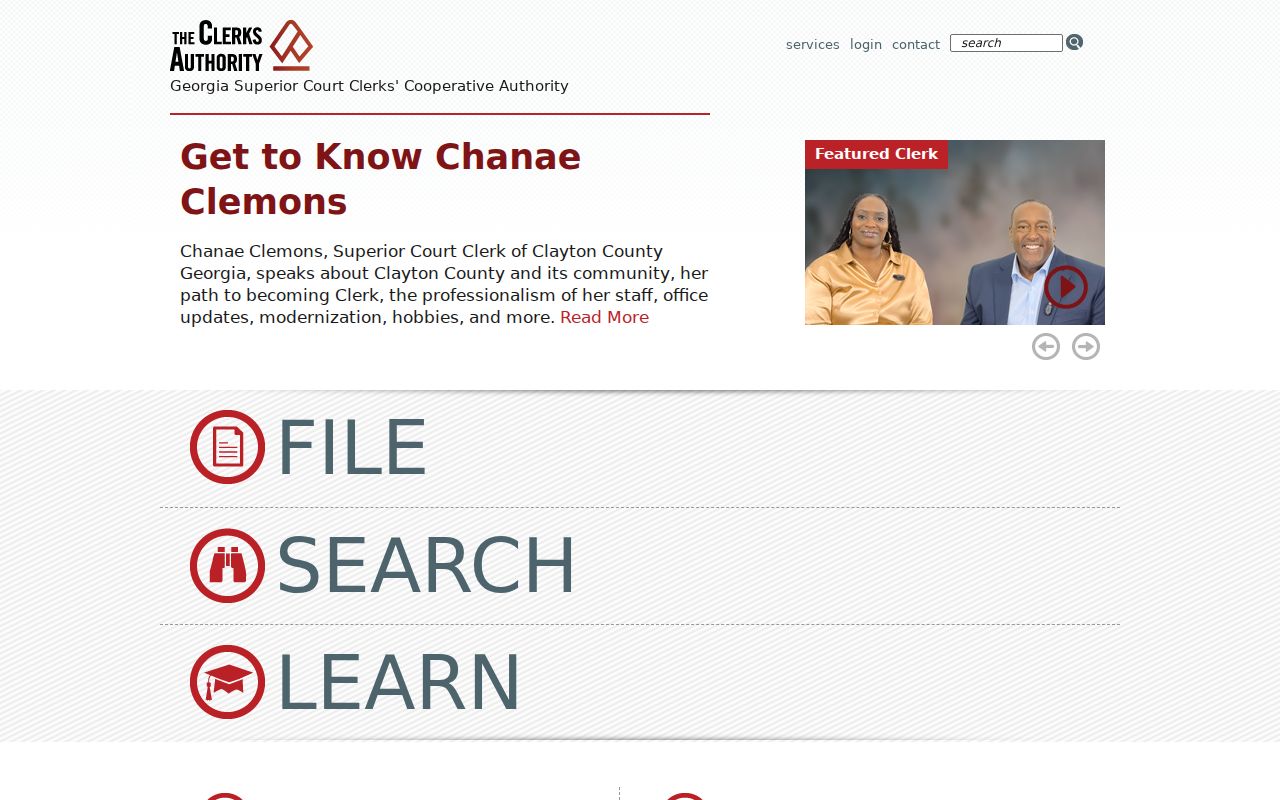
The portal is useful for deeds, liens, plats, UCC filings, notary records, and clerk resources, not as a substitute for the correct trial-court file.
Request Georgia Certified Court Copies
A plain Georgia portal image may help research, but a certified copy bears the Georgia clerk's authentication. Georgia exemplification adds a further level of authentication and can require clerk and judge action. Ask the receiving institution which Georgia form it needs before paying. Georgia certification can take longer than a download because staff must retrieve, compare, and seal the official record.
- Identify the Georgia county and court class that owns the record.
- Provide the Georgia case number, case style, parties, filing year, and exact document.
- Choose inspection, plain copy, certified copy, or exemplified copy.
- Ask for a written estimate covering search, pages, certification, postage, and portal charges.
- Submit through the Georgia clerk's allowed counter, mail, email, fax, or official portal channel.
- Check the seal, case number, and document completeness when the copy arrives.
Note: Do not send Social Security numbers or other sensitive identifiers by ordinary email unless the Georgia clerk specifically directs a secure method.
Georgia Clerk Request Fields
No single certified-copy form governs every Georgia clerk. A focused written request makes an older or non-indexed search easier. Identify an existing record instead of asking the clerk to create a report or perform legal research. Include a maximum authorized cost and say whether inspection or a narrower date range is acceptable.
| Field | Required | Notes |
|---|---|---|
| County and court class | Yes | Distinguishes Superior, State, Probate, Magistrate, Juvenile, or Municipal. |
| Case number and style | If known | The fastest, safest match. |
| Party names and date range | Yes for name search | Include former names or business variants when relevant. |
| Exact documents | Yes | For example, final judgment, indictment, will, letters, or decree. |
| Copy and certification level | Yes | State plain, certified, exemplified, electronic, or inspection. |
| Contact and delivery details | Yes | Provide mail or approved electronic delivery information. |
| Maximum cost | Recommended | Ask the clerk to pause and quote if the estimate exceeds it. |
Georgia Court Clerk Fees
Georgia research does not support one statewide price for every court copy or filing. Clerks may charge for pages, search or retrieval work, certification, exemplification, media, postage, and allowed portal services. Filing totals can also include service, publication, and local additions. Ask the actual custodian for a current written estimate. Inspection or a native electronic format can reduce cost, while a vendor download does not purchase clerk certification.
| Item | Amount |
|---|---|
| Counter inspection | Ask whether free inspection is available |
| Plain or certified court copy | Current clerk page and certification schedule |
| Exemplified copy | Current clerk schedule; Probate schedule lists $15 plus copies |
| Archive retrieval or staff search | Quote based on scope and lawful charges |
| Portal document or convenience charge | Provider terms; separate from certification |
| Filing, service, or publication | Case, county, and service method determine total |
Georgia Court Forms and Filing
Georgia court forms can be statewide or local, and choosing a form does not decide jurisdiction. The Georgia Guide & File service provides official guided interviews for supported court forms. Local clerks can also publish filing covers, summons forms, domestic packets, copy requests, and payment instructions. Read the selected court's rules before filing.
- Guide & File interviews for supported self-help filings
- Local poverty affidavits or fee-waiver requests
- Case-specific summons, service, domestic, and certification forms
- Probate forms standardized through Georgia probate authorities
The official Georgia Guide & File platform shows the guided form service described above.
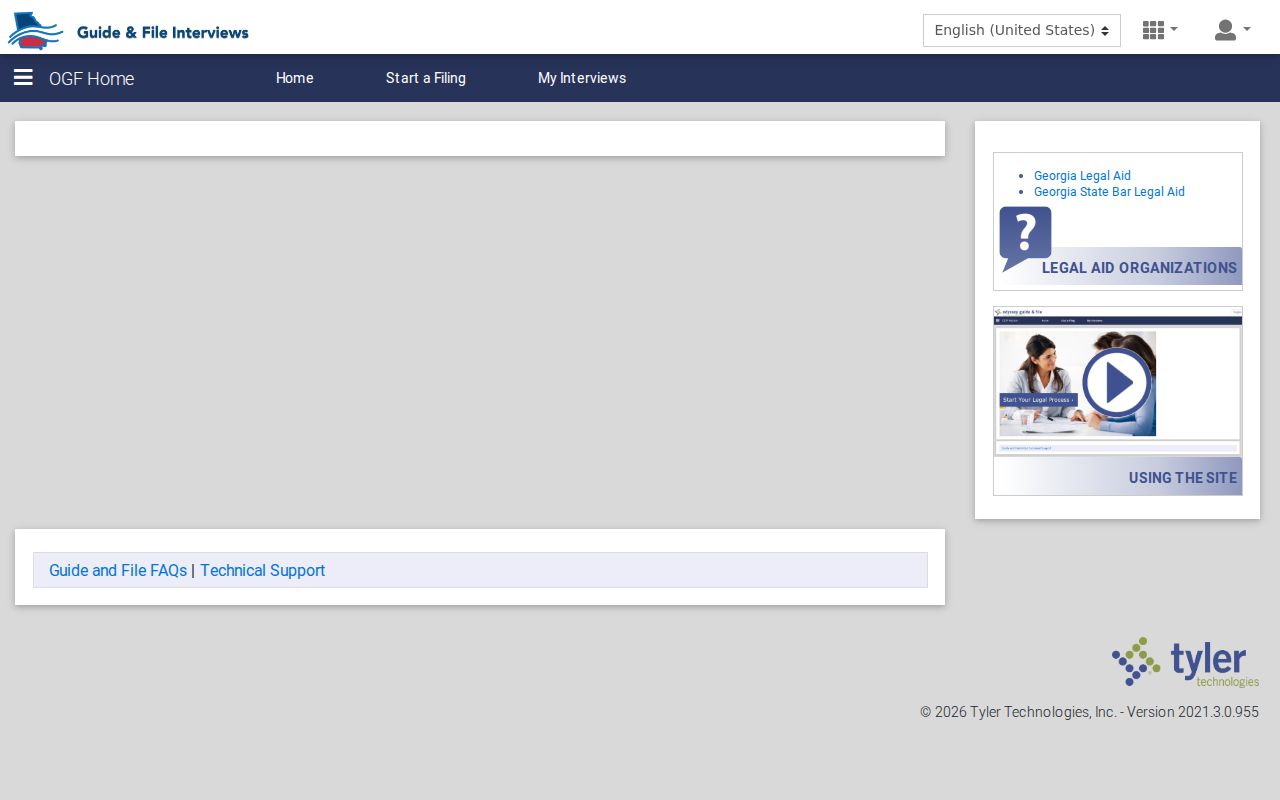
The guided platform supports form preparation, while filing acceptance and local add-ons remain with the correct Georgia clerk.
Georgia E-Access and E-Filing
Electronic filing and public access are related but not the same. The Georgia Courts E-Access list routes users court by court and states that a provider account is required.
The list does not promise coverage of every Georgia court, historical period, or document image. A listed provider may show recent index data while older paper records still require the clerk.
The separate Georgia Courts e-filing matrix identifies participating State and Superior Courts and providers, including mandatory or available status.
This official matrix should be checked before opening a provider account because filing availability varies by court and county.
Georgia Courts links Odyssey eFileGA as one filing channel.
The Odyssey landing page is for electronic submission; it does not grant public access to every sealed, protected, rejected, or non-digitized document.
PeachCourt is an officially linked private provider for participating Georgia courts, and account or transaction charges may apply.
The provider screen must be read with the official participation list. A PeachCourt account is not proof that a specific court or archived year is covered.
Mail remains an important Georgia access channel. Ask the Georgia clerk for the payee, accepted payment, mailing address, return-envelope rule, and certification total. Email or fax is available only where a Georgia clerk authorizes it. A formal Georgia Open Records Act request goes to the designated custodian and should name existing records. Georgia's researched response rule generally requires action within three business days, but that can be an availability and cost response rather than completed production.
Find Any Georgia Court Clerk
Every Georgia county has a Clerk of Superior Court, Probate Court, and Magistrate Court structure, while State Court is not universal and Municipal Courts are city based. Browse the full directory of all 159 Georgia counties to reach local court information. Then confirm the court class on the caption, citation, or docket before ordering.
A useful first call asks whether the office holds the named case, whether an online index covers the year, how an archive search works, what certification is available, and what the current fee will be. If the office is wrong, ask for the proper Georgia court clerk rather than submitting the same request to several custodians. That preserves time and avoids duplicate charges.
Note: Georgia's elected Superior Court clerk is the primary county custodian, but separate court clerks remain essential for many local records.