
Search Georgia Court Records
Georgia does not operate one free public search covering every Georgia court. The official Georgia Courts E-Access directory lists participating Georgia Superior and State Courts by county and sends users to the provider serving that Georgia court. An account is required. Georgia coverage is specific to the named court, so a listed Superior Court does not mean that the same Georgia county's State, Magistrate, Probate, Juvenile, or Municipal Court records are included. A missing Georgia court or case calls for a local search, not a conclusion that no Georgia court record exists.
Start with the exact Georgia case number when possible. Preserve its punctuation and leading zeros. For a Georgia name search, gather the legal name, prior names or business variants, approximate filing year, likely case type, and filing county. Georgia venue usually follows the event or legal filing, not a person's current home. A Georgia citation names its court, a filing notice identifies the Georgia clerk, and an arresting agency helps locate the criminal venue.
The official court-by-court E-Access list shows why Georgia coverage must be checked at court level.
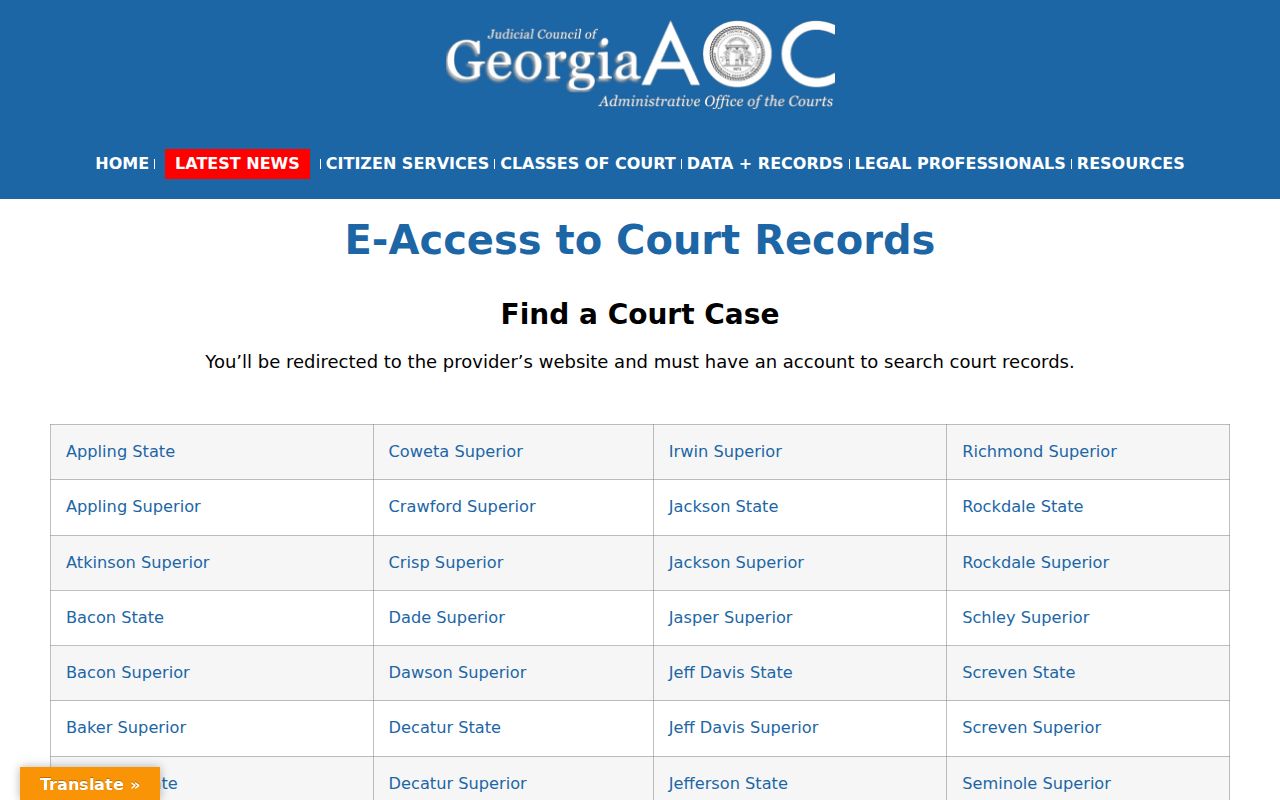
Use the listed destination only for that Georgia court, then return to the Georgia county clerk when the provider lacks the needed date range or document.
- Identify the Georgia filing county and court class from the citation, arrest, complaint, notice, or other source document.
- Check the Georgia Courts E-Access directory and open the provider linked for that exact Superior or State Court.
- Search the full Georgia case number first. Then try name variants, a date range, case type, and the precise Georgia court.
- Open the Georgia result, verify identity and venue, and read later entries for changes, appeals, or amended orders.
- If the Georgia court or record is absent, use the county site, clerk counter, phone, mail, approved email or fax, or a focused written request.
- Order a certified Georgia copy from the originating clerk when an agency, court, or other recipient needs authenticated proof.
Georgia Court Record Search Fields
The official Georgia state page is a routing interface rather than a single query form. It presents a Georgia court-by-county list, a provider destination, and an account requirement. A linked Georgia provider such as PeachCourt commonly offers the fields below after registration. Controls vary by provider and participating Georgia court, so the inventory describes a representative Georgia search rather than a uniform state form.
| Field Label | Type | Required | Notes / Format |
|---|---|---|---|
| Person or business name | Text | One search key | Use a full or partial indexed name and try legal variants. |
| Case number | Text | Alternative | Use the Georgia filing court's format, including punctuation and leading zeros. |
| County and court | Dropdown | Commonly required | Select the precise participating Georgia Superior or State Court. |
| Case type | Dropdown or filter | No | May narrow civil, criminal, domestic, and provider-indexed subtypes. |
| Filed from and filed to | Date fields | No | A date range can separate people or businesses with common names. |
| Party role or status | Filter | No | Availability depends on the Georgia provider and court. |
Georgia Courts officially links providers but does not turn them into state agencies. The PeachCourt service may require registration and charge for searches or documents.

A Georgia provider result is a useful index. It is not a clerk-certified Georgia court record, and access to images depends on payment, security, digitization, and each Georgia court's participation.
Types of Georgia Court Records
Georgia court records follow each Georgia court's jurisdiction. Georgia Superior Court keeps felony, divorce, equity, land-title, and broad civil files. Georgia State Court, where established, handles misdemeanors, many traffic prosecutions, and civil cases not reserved elsewhere. Georgia Magistrate Court holds small claims up to $15,000, dispossessory cases, garnishments, warrants, and preliminary criminal proceedings. Georgia Probate Court keeps estates, wills, guardianships, and marriage licenses. Georgia Municipal Court handles local ordinance and traffic matters, while Georgia Juvenile Court keeps restricted delinquency and child-welfare cases.
The Georgia filing itself matters. Discovery exchanged between parties but never filed is not a Georgia clerk record. Police reports and body-camera footage stay with Georgia law enforcement unless filed. A Georgia judgment lien may also appear in a separate land-record system. Georgia's State-wide Business Court has its own rules for qualifying complex commercial disputes, while Georgia accountability-court treatment records remain with the host court and may be confidential.
- Civil: complaints, service returns, answers, motions, orders, verdicts, judgments, and appeal papers.
- Criminal: indictments or accusations, pleas, motions, verdicts, sentences, and post-judgment events.
- Domestic: divorce pleadings, financial affidavits, parenting plans, settlements, temporary orders, and final decrees.
- Probate: wills, petitions, heirs lists, letters, inventories, claims, distributions, and discharge orders.
- Traffic: citations, pleas, court dates, dispositions, assessments, payments, and failure-to-appear events.
- Appellate: notices, briefs, orders, opinions, and remittiturs, with the trial record still held by its original clerk.
What Georgia Court Records Show
A Georgia case result often begins with the Georgia court, county, case number, style, case type, filing date, status, and assigned judge. Deeper Georgia views may show parties, lawyers, service, claims or charge counts, hearings, a chronological docket, outcomes, financial assessments, and document-image indicators. No single Georgia layout or case-number format controls all vendors. Read the signed Georgia final order and later entries instead of relying on a status label alone.
| Field | What It Shows |
|---|---|
| Case number and style | The Georgia court's identifier and caption naming the parties. |
| Court and county | The Georgia filing office that holds the source record and can certify it. |
| Case type and filing date | The indexed category and date the case began. |
| Parties and counsel | Plaintiff, petitioner, state, defendant, respondent, lawyers, and their roles. |
| Events and hearings | Filings, service, motions, notices, settings, continuances, orders, and appeals. |
| Claims or charge counts | Allegations by claim or count, which may each end differently. |
| Disposition | The outcome of a Georgia case, party, claim, or charge, not always the whole file. |
| Document indicator | Whether a Georgia image may exist online, subject to access, fees, and security. |
Georgia record dates also need care. A signed date, file-stamped date, entered date, service date, and Georgia provider upload date can differ. A scheduled Georgia hearing can be moved by a later continuance. Confirm a live calendar with the Georgia clerk before attending, and inspect later events for an amended judgment, appeal, satisfaction, or vacatur.
Note: Georgia provider labels are not statewide legal codes; confirm unfamiliar terms through the filing court's legend or signed document.
Georgia Court Records Access Law
Georgia's Open Records Act begins at O.C.G.A. § 50-18-70, which declares agency records open unless another law or court order applies. Sections 50-18-71 and 50-18-72 govern inspection and copying procedure, electronic access, reasonable charges, and exemptions. Court-controlled records can also be subject to judicial rules, sealing orders, and inherent court authority. Routine clerk channels are usually the best first route for a named case.
A focused written request names the court, county, case or parties, date range, and exact existing documents. State whether inspection, plain copies, certified copies, or exemplified copies are needed. Ask for an estimate and electronic format where available. The custodian generally responds within three business days by producing records, giving a timetable and cost, or citing a legal basis for withholding. That response deadline does not guarantee final production within three days, especially for archived or redacted files.
The Georgia Attorney General publishes official instructions for making an Open Records Act request to the actual custodian.
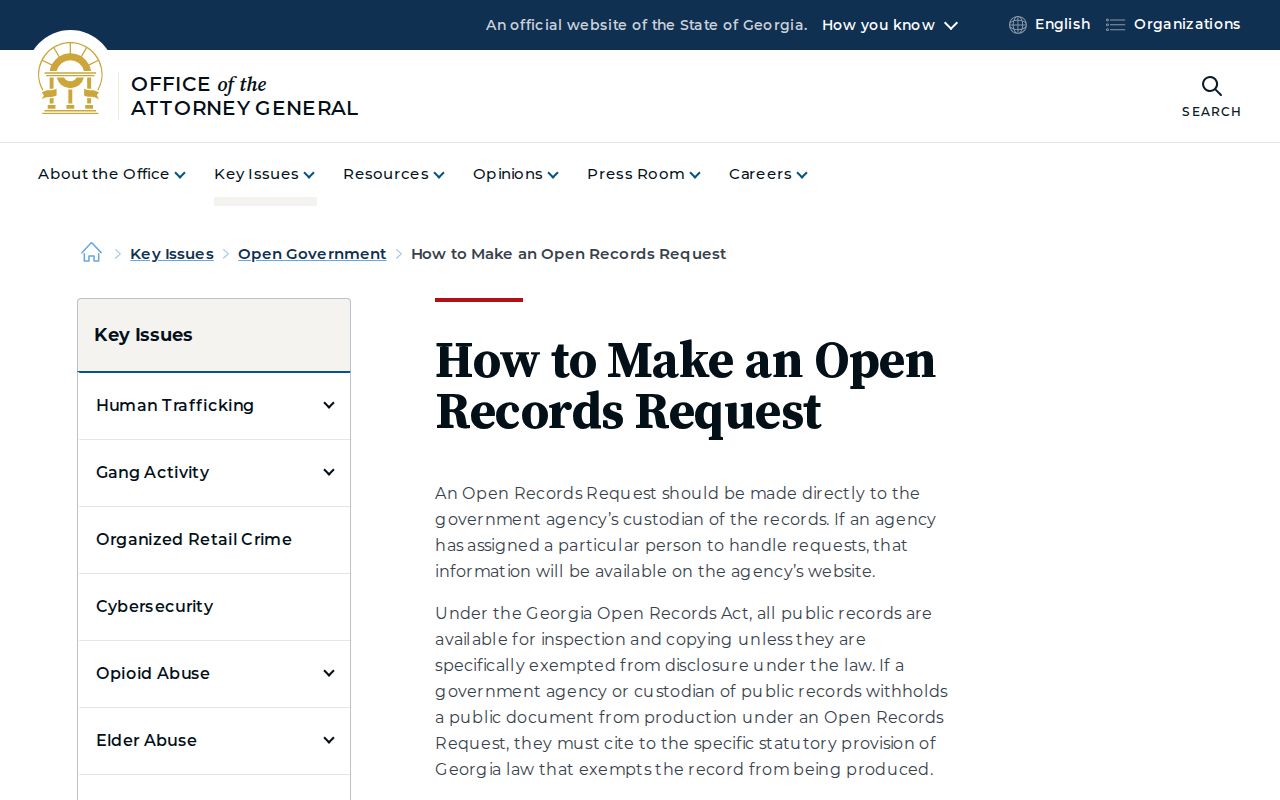
The request guidance favors clear scope and direct routing rather than a broad demand sent to an office that does not hold the file.
The Attorney General's Open Government FAQ also explains public-record definitions, electronic access, charges, exemptions, and enforcement.
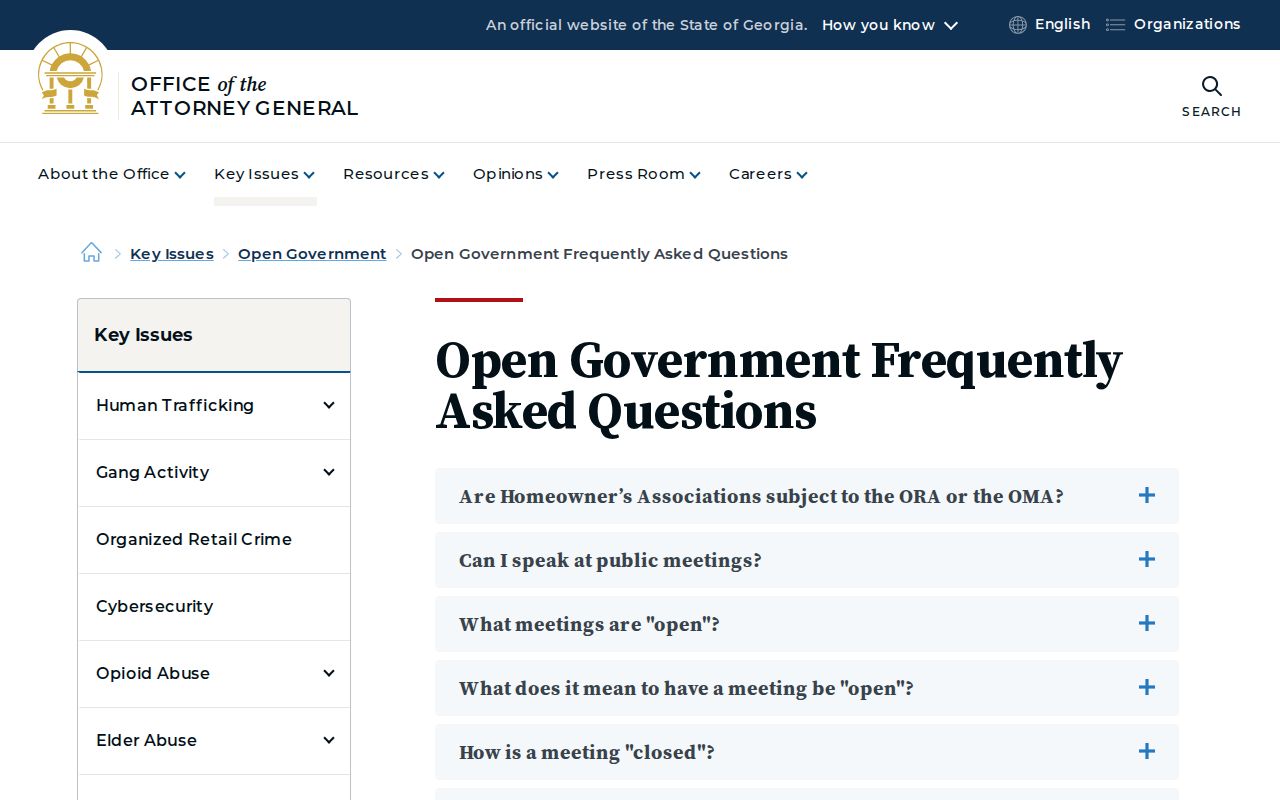
Those agency rules apply alongside judicial authority, redaction duties, and any sealing order that controls a Georgia court file.
Note: Georgia's Open Records Act does not compel a clerk to create a new report, answer legal questions, or release material barred by law.
Fees vary by court, county, document, and delivery method. Inspection can reduce copying costs. A provider charge buys access or an image, not clerk certification. Search labor, redaction, per-page copies, certification, exemplification, media, postage, and archive retrieval may be separate. Ask the receiving institution whether a plain PDF, certified copy, or exemplified copy is required before paying.
Restricted Georgia Court Records
Public access has firm limits. Juvenile records are governed by role-based rules under the Juvenile Code. Adoption files are sealed. Mental-health evaluations, commitment records, competency reports, victim or minor details, and protected addresses can be withheld or redacted. A public docket may show that an order exists while hiding the protected document. Social Security numbers, financial account numbers, and other sensitive identifiers should not appear in public copies.
Redaction masks protected fields while leaving the rest available. Sealing blocks broader access. Georgia criminal-history record restriction limits dissemination of eligible GCIC information and does not necessarily erase a courthouse docket. First Offender treatment, a pardon, and sealing are also distinct remedies. A party seeking access or closure may need identification, a party or counsel portal, a redacted copy request, or a motion and court order filed in the county that holds the case.
- Disposition
- The outcome of a case or one claim or charge. It must be read at count and party level.
- Dead docket
- An inactive criminal charge placed in that status by court order, not an automatic acquittal or dismissal.
- Record restriction
- Georgia's process limiting eligible criminal-history dissemination, separate from destroying or sealing every court record.
- Remittitur
- The appellate court's formal transmission returning the decided appeal to the lower court.
Get Older Georgia Court Records
Older Georgia court records may be paper, microfilm, offsite, or indexed in a book even when no digital image exists. Call the correct clerk with the case number, full party name, case type, and approximate year. Ask whether an index survives, whether an archive box requires advance retrieval, and what copy or certification options are offered. A lawful retention schedule may explain why a file no longer exists; destruction is different from sealing.
The Council of Superior Court Clerks directory supports searches by state map, county, clerk, city, county code, and text. It covers Superior Court clerks, but separate court classes may have separate offices.
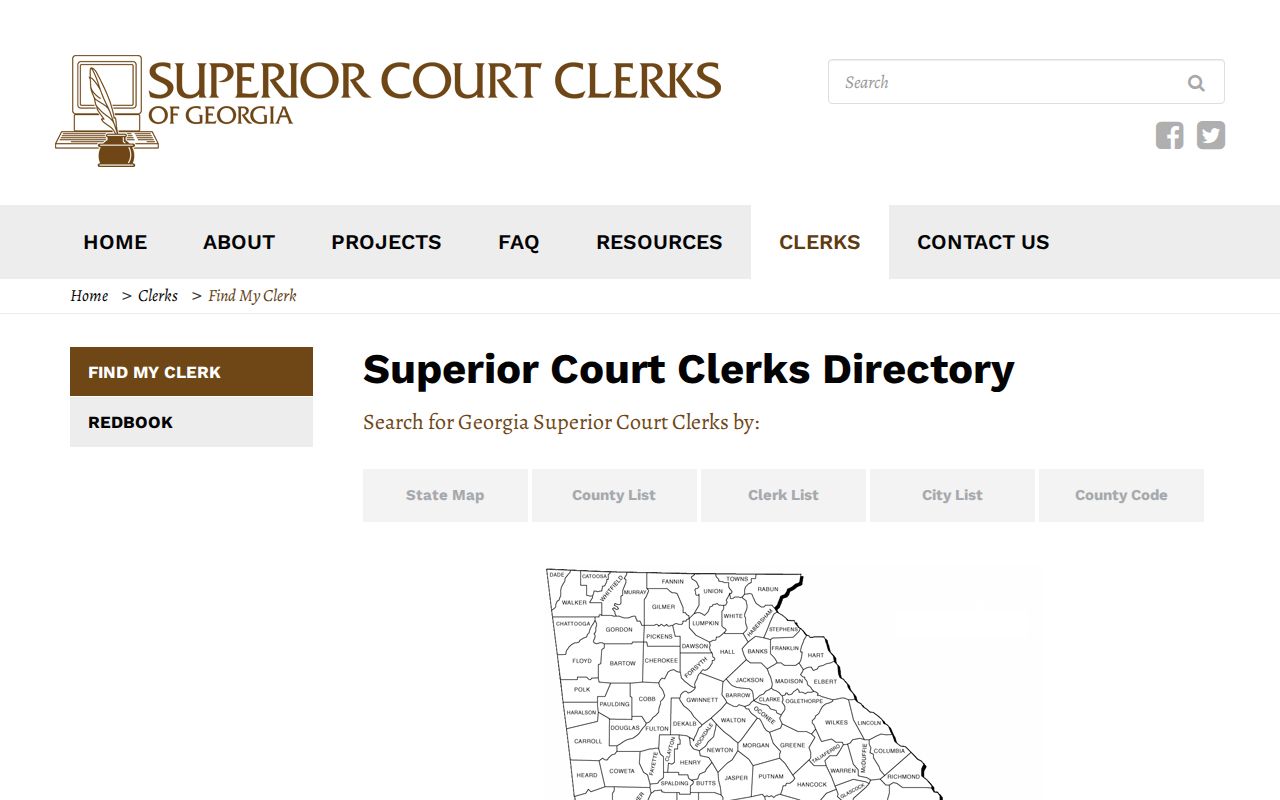
A county entry can provide clerk contact, address, circuit, and official site details needed to request the source record.
Georgia Filing and Record Access
Electronic filing and public record access are related but not equal. Georgia Courts publishes a separate e-filing matrix showing whether Odyssey eFileGA, PeachCourt, or another provider is available or mandatory for a participating court. A mandatory filing rule does not mean all historic court records or document images are publicly searchable.
The official Georgia e-filing participation matrix distinguishes providers and court participation.
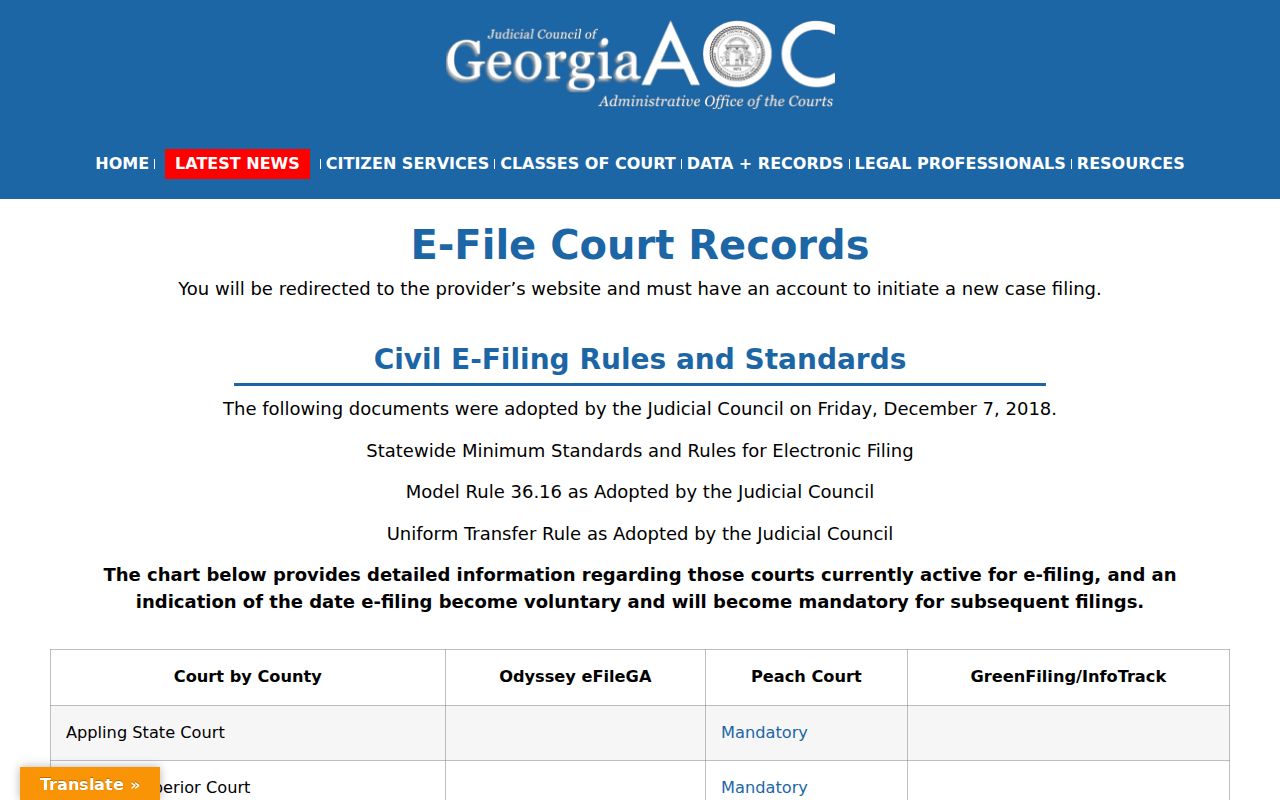
Account access may support filing, alerts, searches, or downloads, yet sealed records and older paper files remain outside the public view.
The Odyssey eFileGA portal is one filing destination linked from the state matrix.
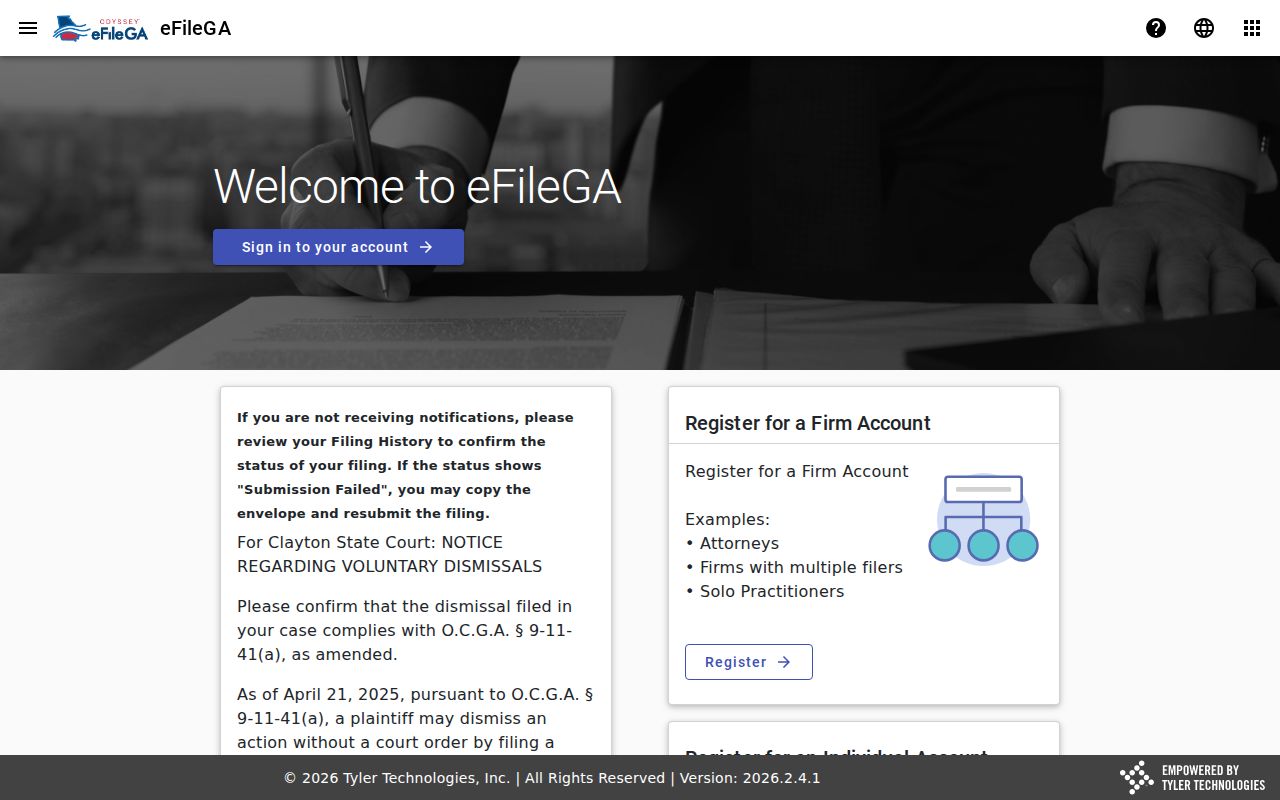
Use it for authorized filing where the matrix directs, not as proof that every Georgia court record is open or indexed there.
Note: A submitted electronic envelope can be rejected before clerk acceptance, so submission alone does not establish a filed Georgia case.
Separate Georgia Record Systems
The Georgia Superior Court Clerks' Cooperative Authority supports clerks and statewide deed, lien, plat, UCC, and notary systems. Those indexes can matter when a judgment or estate affects property, but they do not replace a civil or criminal case search. Likewise, appellate court calendars and opinions show appeals, not the complete trial file.
The official Georgia Courts description of GSCCCA defines its statewide clerk-support role.
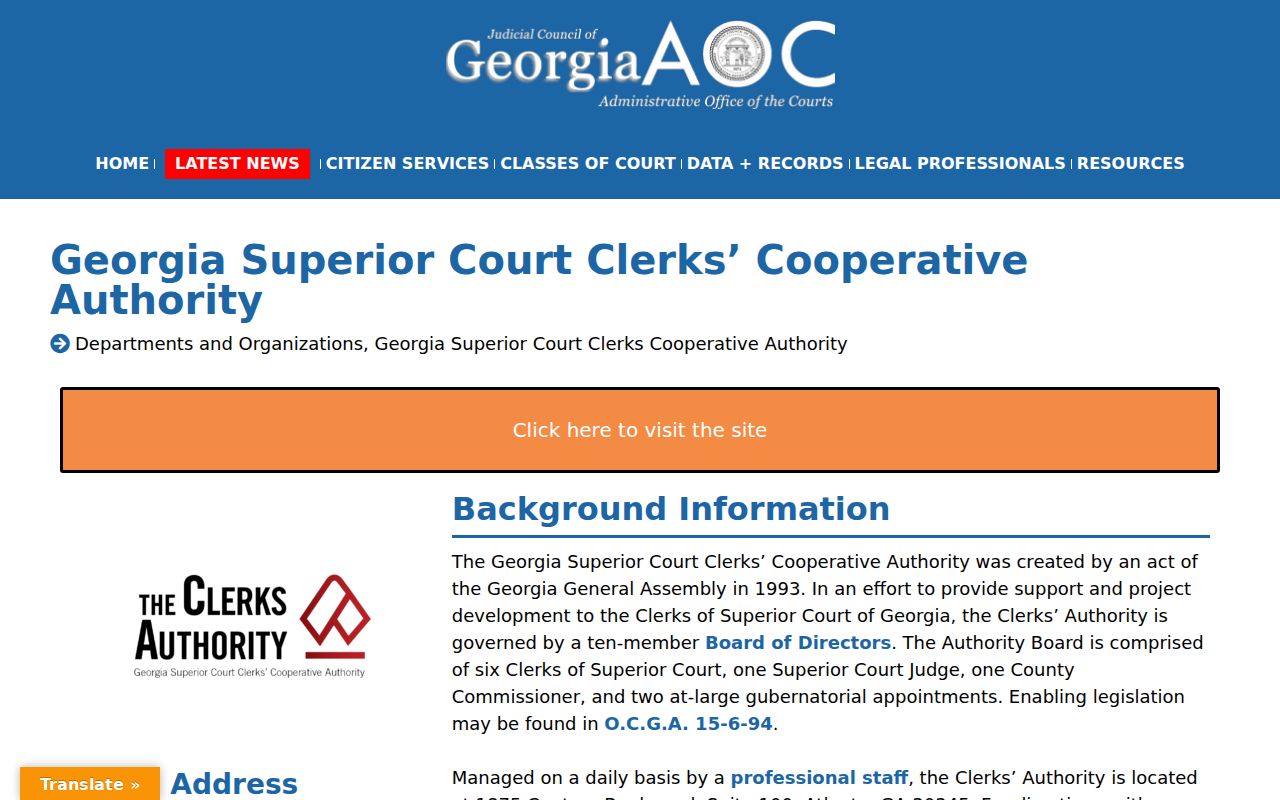
This separation prevents a deed or lien search from being mistaken for a complete court-case lookup.
Georgia's state e-filing standards permit several providers instead of one universal database. Always match the tool to the exact court, county, record type, and historical period before treating a negative result as meaningful.
Find Georgia Court Record Offices
Georgia files trial cases locally. Felony, divorce, equity, and land-title records go to the Clerk of Superior Court in the filing county. A misdemeanor or traffic case may belong to a State, Municipal, Probate, or Magistrate Court. Small claims and evictions begin in Magistrate Court, while estates and marriage licenses belong to Probate Court. Open the Georgia county directory to reach the right local records site, or review the Georgia clerk structure when the court class is unclear.
Tip: Match both county and court class before contacting a clerk; the Superior Court office does not hold every local court record.